Air purification
The air we breathe directly affects our health and well-being. Especially indoors, where we spend most of our time, invisible pollutants can accumulate. Air cleaners, alongside ventilation systems, offer an effective solution to improve air quality and create a healthy living environment. On this page, you can read what an air purifier is, how an air purifier works, why air purification is important and much more.
What is an air purifier?
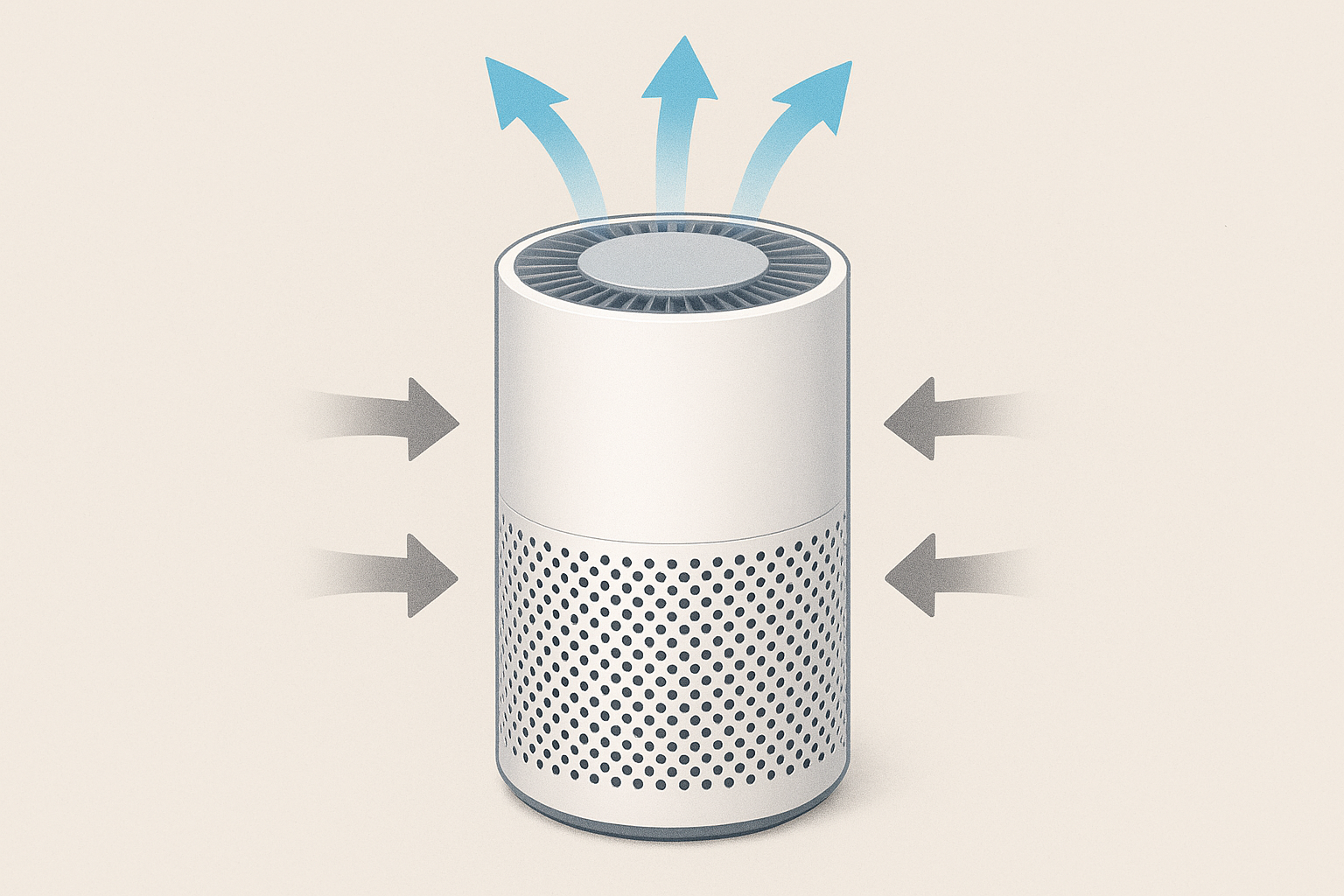
An air purifier is a device that cleans the indoor air of harmful substances, such as dust particles, pollen, smoke, bacteria, viruses, mould and volatile organic compounds (VOCs). Air purifiers use various technologies, including electrostatic filters, mechanical filters (such as HEPA), activated carbon filters, UV light or ionisation, to remove these pollutants from the air. The aim is to create a healthier and cleaner living environment, both in industrial applications and for people in the home with allergies, COPD, asthma or other respiratory problems.
Why does air purification matter?
Air cleaning is essential for improving indoor air quality, which is often worse than outdoor air due to accumulation of pollutants. Poor indoor air quality can also result from activities taking place indoors. Poor air quality can lead to health complaints such as headaches, fatigue, allergies, the development of COPD and respiratory problems. It is even estimated that 12,000 people die every year in the Netherlands due to poor air quality¹.
Air cleaners can be especially important when there are high concentrations of pollutants in the air. Think of high concentrations of particulate matter (PM 2.5 or PM 1.0) or other pollutants. Air cleaning also plays a role in limiting the spread of pathogens via aerosols. Good quality air purifiers contribute to a healthy indoor climate by reducing the presence of these pollutants in rooms.
How does an air purifier work?
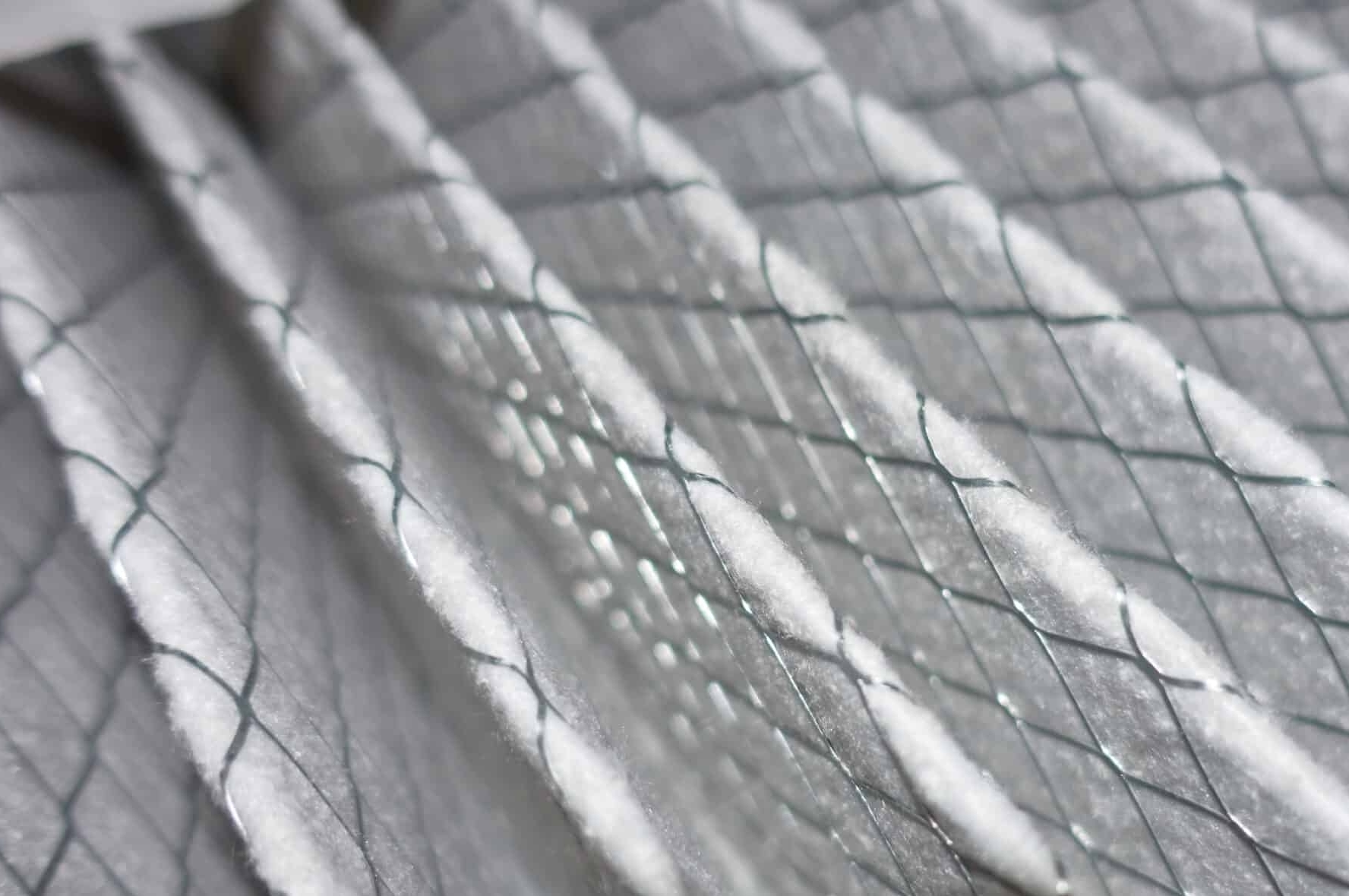
An air purifier equipped with a filter draws in the ambient air and passes it through one or more filter systems. The most commonly used technology is the mechanical filter, which has different classes, but can remove up to 99.95% of small particles such as dust, pollen and some bacteria from the air. In addition, activated carbon filters can absorb gaseous pollutants such as volatile organic compounds and unpleasant odours.
Some air purifiers use UV-C light to destroy micro-organisms such as viruses and bacteria. Other models use ionisation, where particles are electrically charged so that they precipitate or are more easily captured by filters. Negative ions can also deactivate virus particles from the air, as the ions attach themselves to the virus particles. Many modern air purifiers combine multiple technologies to tackle a wide range of contaminants. The cleaned air is then blown back into the room, providing a cleaner and healthier living environment.
What are misconceptions about an air purifier?
Although air purifiers make an important contribution to better air quality and a healthier indoor environment, there are some misconceptions about air purifiers, their operation and effectiveness.
-
Misconception 1: air cleaning is the same as ventilation
A common misconception is that air cleaning is the same as ventilation is. Ventilation is the supply and removal of clean air, for example through a mechanical ventilation system. Air cleaning purifies the existing air in a room, but does not replace it. Good ventilation is still necessary to remove CO₂ and moisture, for example. Thus, ventilation and air purification can go well together; they do not exclude but complement each other.
-
Misconception 2: all air purifiers work equally well
It is also often thought that all air purifiers work equally well. In reality, the quality varies greatly from one device to another and the choice of particular filter technology depends heavily on the pollution source and the type of room. Within homes and offices, models with certified HEPA filters and sufficient air freshening capacity are effective against fine dust and allergens.
-
Misconception 3: one air purifier purifies an entire room
It is sometimes assumed that one air purifier directly purifies an entire room. However, the effectiveness depends on the size of the room, placement of the device and air circulation. A well-placed air purifier that matches the volume of the room is essential.
-
Misconception 4: ionisation is always safe
Finally, there is confusion about ionisation. Although this technique can be effective, some ionisers produce ozone, which can be harmful with prolonged exposure. It is therefore important to choose devices that meet strict safety standards and do not emit ozone.
- Ozone production/side effects: With ionisation or UV technology, ozone emissions must remain <0.05 ppm. Check that the system is certified ozone-free.
- A good air cleaner is distinguished not only by high filter efficiency, but above all by stable performance at low energy and noise levels, long service life, low pressure drop over time and low total cost of ownership. The right choice always depends on the pollution source, application and maintenance strategy. Self-cleaning, circular filter systems seem a promising direction for future applications that combine efficiency, sustainability and health, with minimal dependence on consumable filters and maintenance.
Current legislation
Air cleaners fall under the broader frameworks for ventilation and air quality, as laid down in the Building Works Decree for the Living Environment (Bbl). For new buildings and renovations, ventilation requirements in accordance with NEN 1087 and NEN 8087 apply, with air cleaning being an additional measure. Additional requirements apply in sectors such as education and hospitality, including mandatory CO₂ monitoring from July 2025. At European level, limit values for particulate matter (PM 2.5 and PM 10) and nitrogen oxides have been tightened, with the aim of achieving significantly lower concentrations by 2030 based on the European Directive². These standards can have direct implications for the deployment of air cleaning technologies in buildings, especially in areas with increased exposure to air pollution. Professionals should consider these frameworks and future tightening in design, installation and management.
Maintenance
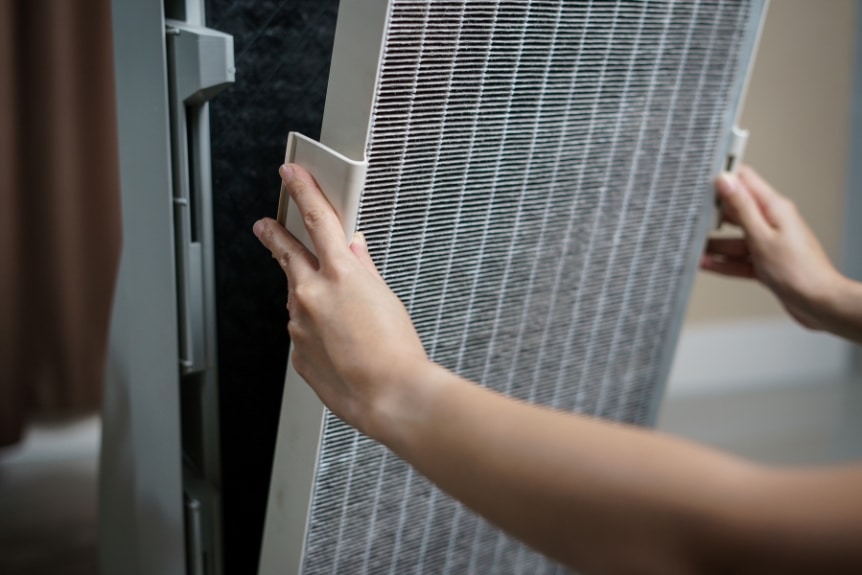
A properly functioning air purifier requires careful maintenance to ensure continued air quality. Depending on the type of air purifier (e.g. HEPA filter, activated carbon filter, ioniser), the frequency of maintenance varies. Instead of standard maintenance intervals, it is more effective to measure the operation of the device periodically. This can be achieved, for example, by smart monitoring devices that can measure air quality. Once the performance of the air cleaner noticeably decreases, targeted maintenance can be carried out. The starting point is to measure the performance of the air cleaner. This prevents unnecessary maintenance or premature replacement and ensures that the air quality in the building is maintained.