New guideline provides a quality framework for the retrofitting of air handling units
Indoor Climate Netherlands and the Binnenklimaattechniek Knowledge Centre publish the first version of the Air Handling Unit Retrofit Guidelines
Rijswijk, 22 September 2026
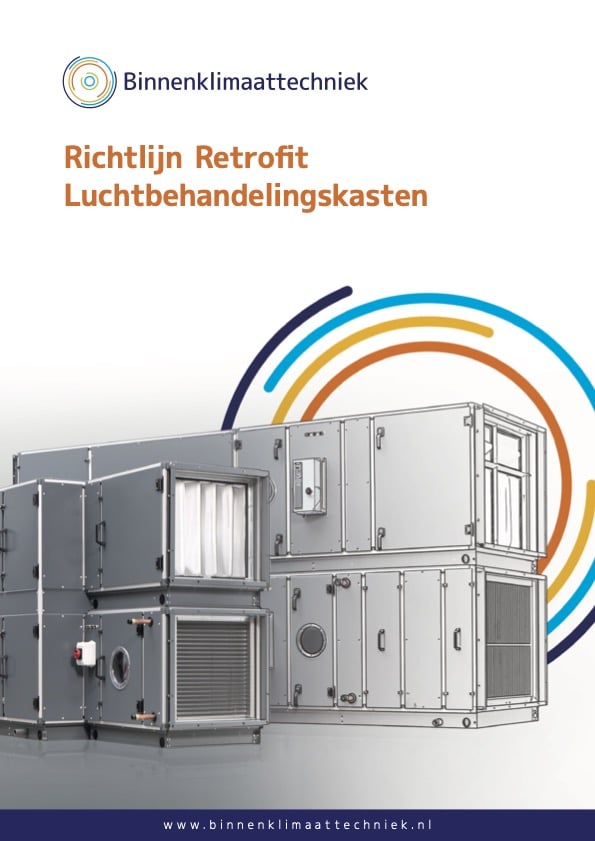
The first version of the new Air Handling Unit Retrofit Guideline is now complete. The development of the guidelines was initiated by AQ Group, Blygold Nederland and Piguillet Group. Together with suppliers of air handling units and specialist retrofit companies within Binnenklimaat Nederland, they have pooled their technical knowledge and practical experience.
Under the guidance of Binnenklimaat Nederland, this knowledge has been translated into a standardised quality framework for assessing, improving and making existing air-handling units in non-residential buildings more sustainable. The guideline is published and made available via the Binnenklimaattechniek Knowledge Centre.
From initiative to concrete guideline
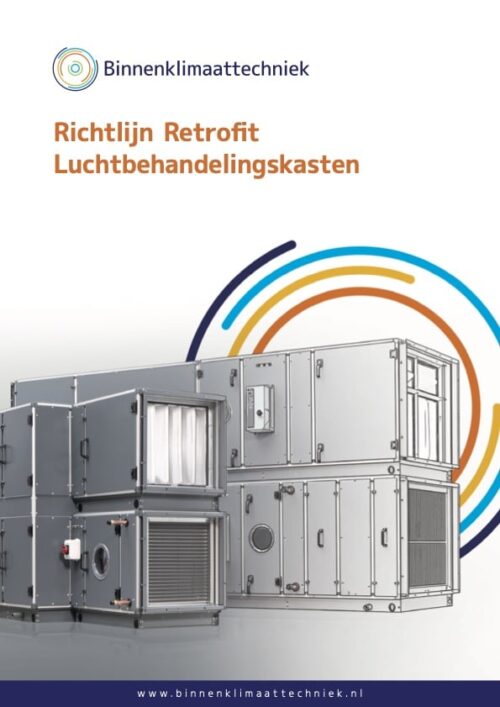
On 7 May, the development of the guideline was officially marked during the General Meeting of Members of Binnenklimaat Nederland in Zoetermeer. At the meeting, the initiators presented the initial document to John Lens, director of the Binnenklimaattechniek Knowledge Centre.
In June, a joint working session took place at AQ Group with representatives from suppliers and specialist retrofit companies. During this meeting, knowledge, practical experience and technical insights were pooled. This joint effort has now led to the publication of the first version of the guideline.
Consistency and quality assurance
The existing building stock contains many air handling units which, from a technical point of view, have not yet reached the end of their service life, but whose performance could be significantly improved. In such situations, retrofitting can be a sustainable and cost-effective alternative to complete replacement.
Until now, there has been no widely accepted guideline that clearly sets out how the technical condition of an air handling unit should be assessed and what criteria a high-quality retrofit must meet. The new guideline changes that.
Improving sustainability whilst retaining existing installations
“Making the built environment more sustainable requires not only new installations, but also, and just as importantly, the smarter use and improvement of what is already in place. With this guideline, we are bringing together the expertise of suppliers and specialist retrofit companies. This provides clarity on what constitutes a high-quality retrofit and enables clients to better focus on energy performance, circularity, quality and a healthy indoor environment.” Remi Hompe, Director of Binnenklimaat Nederland
The directive thus also supports the wider move towards extending the service life and ensuring high-quality reuse of HVAC systems. By upgrading existing air handling units in a controlled and verifiable manner, material consumption and waste streams can be reduced. At the same time, the energy performance, reliability and indoor air quality of buildings can be improved.
A basis for further development
The published guideline is a first draft. Over the coming period, it will be put into practice and evaluated. Lessons learnt from projects and new insights from the market will be used to further develop the guideline. Subsequent versions will, amongst other things, provide more in-depth coverage of European regulations and CE marking.
Binnenklimaat Nederland is also working on the development of a quality mark for work carried out in accordance with the directive. This represents the next step towards demonstrably ensuring the quality of implementation.
With the publication of this document, Binnenklimaat Nederland and the Binnenklimaattechniek Knowledge Centre are taking an important step towards a recognisable and widely supported standard for the retrofitting of air handling units.