New label shows how healthy homes are
Heijmans and Hat-makers are contributing to the development and field trials of the ‘Indoor Climate Label for Homes’
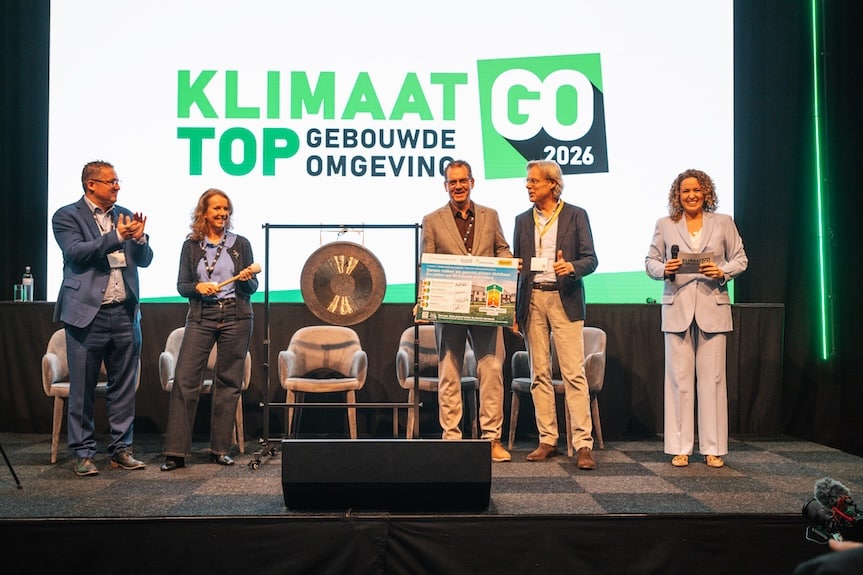
During the Built Environment Climate Summit (KTGO) at the Jaarbeurs Utrecht, the Healthy Indoor Environment Foundation is launching the new ‘Indoor Climate Label for Homes’. This is sorely needed, as an energy-efficient home is not automatically a healthy or comfortable one. This label makes the quality of the indoor climate in homes transparent and verifiable.
How healthy is the air in your home? Does it get too hot indoors on hot summer days? And how do you know if your home is adequately ventilated? An energy label tells you about a property’s energy performance, but there’s been no such label for a healthy indoor environment – until now! The Gezond Binnen Foundation is introducing the new ‘Indoor Climate Label for Homes’, which was launched today at the Built Environment Climate Summit in Utrecht.
How does the label work?
The ‘Indoor Climate Label for Homes’ assesses the quality of the indoor climate on the basis of four criteria: climate, air, light and noise. This involves, amongst other things, assessing the temperature inside the home, the potential for good ventilation, the amount of daylight and protection against noise pollution.
Margot de Heus, Vice-Chair of the Gezond Binnen Foundation: We now know how important a home’s energy performance is. But a home is about more than just energy: the indoor climate has a major impact on the health of its occupants. With this label, we highlight that impact and give health the prominent place it deserves in housing construction.
A recognisable label for healthy homes
The Indoor Climate Label provides an accessible way of visualising the quality of the indoor climate. Just as with the energy label, residents, developers and builders can see at a glance how a property performs. The label shows where a property scores well and where there is room for improvement. This enables all parties to work specifically towards a healthier and more comfortable indoor climate.
Remi Hompe, Chair of the Binnenklimaattechniek Knowledge Centre: If you don’t measure something, you can’t improve it in a targeted way. With the Indoor Climate Label, we translate technical knowledge and scientific insights into a practical tool for the market. In doing so, we bridge the gap between knowledge, technology and the health of occupants.
Development and implementation
Heijmans and Hoedemakers are the first organisations to commit to the further development and implementation of the ‘Indoor Climate Label for Homes’. The indoor climate is already being monitored in a number of pilot homes built by both construction companies.
The measurement data collected form an important basis for the further development and testing of the assessment system. During the KTGO’s plenary opening session, the partnership will be formalised with a joint agreement. The aim is to award the first homes an Indoor Climate Label by 2027.

Marc Hoedemakers, on behalf of Hoedemakers: We want to create homes where people can live not only comfortably, but above all healthily. With the Indoor Climate Label, we are taking the next step by making health and comfort a demonstrable part of how we build and develop.
Healthy homes as the new standard
The launch marks the start of broader collaboration with market players and civil society organisations to make a healthy indoor environment an integral part of design, construction, renovation and management.

Dinant te Brinke, on behalf of Heijmans:
At Heijmans, creating a healthy living environment is a key priority. A home is more than just an energy-efficient building; it is the place where people live and should feel at home. The Indoor Climate Label helps to make health a tangible and measurable concept.